
February 26, 2026 – Today’s workforce operates in a landscape where remote and hybrid arrangements have become the norm. As organizations adapt to these models, the role of artificial intelligence (AI) continues to expand, creating new opportunities and raising questions about how people work, learn, and make decisions.
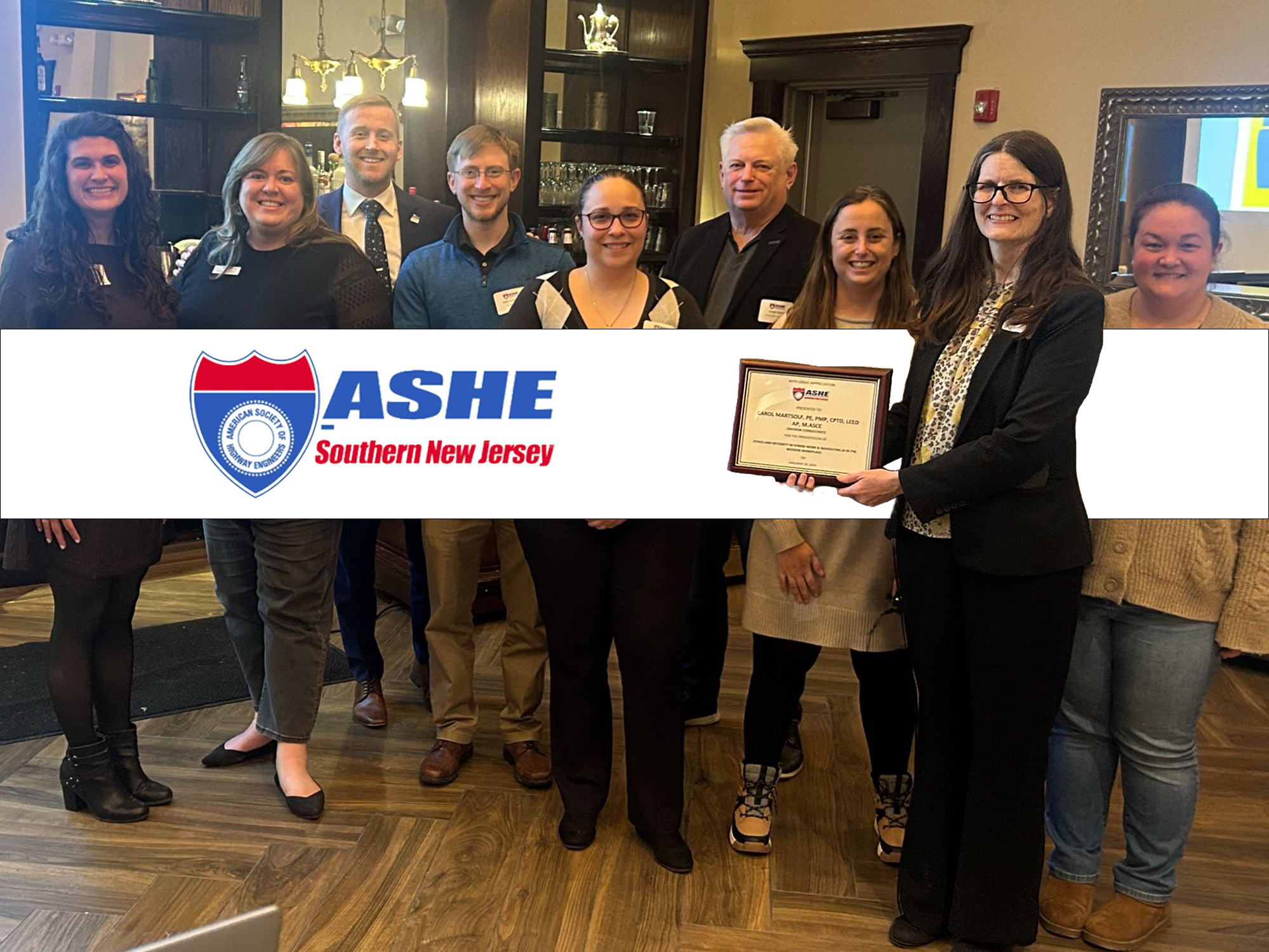
On January 28th, Carol Martsolf, PE, PMP, CPTD, ENV SP, LEED AP presented at the ASHE Southern NJ Annual Ethics meeting, where she examined the responsible use of AI and its growing relationship with remote work. As someone who frequently speaks on AI for professional organizations, Carol had the opportunity to explore a more nuanced question: What ethical considerations emerge when AI and remote work intersect, and how do these factors shape professionals’ early careers?
As a Certified Professional in Talent Development (CPTD), Carol encouraged attendees to think critically about how both AI and remote work affect learning and mentorship. With approximately 82% of employers offering some form of remote work, the way emerging professionals develop skills and build their networks has fundamentally shifted.
Carol noted that traditional learning environments once relied on spontaneous interactions. A colleague offering help with a calculation. A conversation sparked in the break room with a more seasoned professional. Collectively, these experiences create a more complete, organic path for growth. As the firm’s learning and development lead, Carol observes that reduced access to these informal mentorship moments may push emerging professionals toward AI for answers. Without guardrails, they may rely on AI for coaching or problem-solving before developing the judgment needed to interpret that guidance. Because these exchanges happen privately, misdirection can go unnoticed. Carol also commented that organizations are actively trying to define what responsible use of AI looks like and how to mitigate risk as these tools become more embedded in daily workflows. This led her to raise a broader concern about how AI is influencing professionals’ early careers.
“What I think is a more pervasive issue that many may not realize yet is how AI is affecting mentorship and the early career of professionals. ‘Emotional labor offloading’ is something to think about. AI is increasingly used for emotional support, conflict rehearsal, and feedback drafting with our early-career professionals. From an ethical point of view: Are we outsourcing emotional labor instead of building emotionally capable leaders?” Carol shared.
In her closing remarks, Carol emphasized practical advice for those using generative AI responsibly and transparently. Individuals should question, contextualize, and verify any guidance they receive. Carol also noted that while AI offers significant benefits, it must be supported by structure, particularly one that preserves the importance of human interaction for mentoring and guiding emerging professionals.
“There are so many benefits that come with AI, but there needs to be some framework for its use,” said Carol.
Carol is known for building training programs that strengthen professional capability. Grounded in both technical expertise and a deep commitment to workforce development, she brings clarity and intention to discussions about the future of work. As AI and hybrid work evolve, she remains focused on ensuring that organizations use technology ethically and in ways that support, rather than replace, human relationships that are essential to meaningful careers.